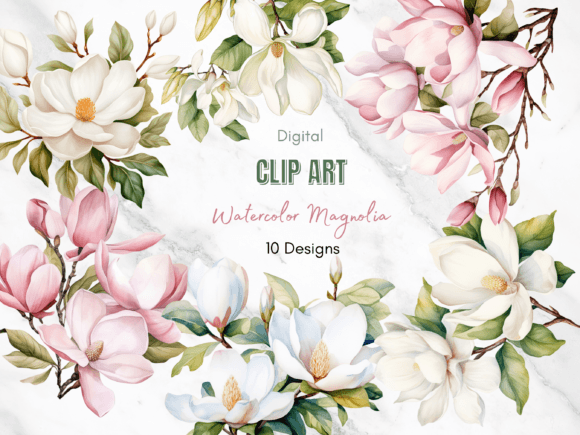
Watercolor Magnolia Clipart: A Designer's Guide to Soft Elegance
The Visual Appeal of Hand-Painted Petals
There’s a distinct quality to watercolor magnolia clipart that digital vectors can’t replicate. It’s the subtle bleed of pigment at the petal edges, the soft transparency where colors layer, and the organic texture that suggests a human hand at work. This style of design asset moves away from the sharp, predictable lines of modern typography and graphic design, offering instead a breath of natural, artistic air. The visual personality is soft, romantic, and inherently elegant. It speaks of spring mornings, gentle sophistication, and a refined yet approachable aesthetic. For a designer or entrepreneur, this isn't just a flower; it's a mood setter. It instantly communicates care, beauty, and a touch of handmade charm, making it a powerful tool in your creative arsenal.
Unlike a bold display font or a structured sans serif font, the strength of watercolor magnolia clipart lies in its ability to add depth and emotion without overwhelming text. Its appeal is universal yet specific—it feels at home in a luxurious wedding suite as it does on a artisanal soap label. The key is understanding its personality. It’s not trying to shout; it’s whispering an invitation. This makes it perfect for projects where you want to evoke feeling and connection, not just convey information. When you choose this type of creative asset, you're choosing to build a brand identity or project that feels personal, curated, and authentically beautiful.
Strategic Applications: From Brand Identity to Digital Content
Knowing where to deploy your watercolor magnolia clipart is half the battle. Its versatility is its greatest strength, but strategic use is what yields professional results. For brand identity, it’s a game-changer for businesses in the wellness, beauty, floral, bridal, or boutique lifestyle sectors. Imagine it as a subtle background texture on a business card, a central motif on a product label, or a delicate border on a website’s header. It immediately sets a tone of quality and care. When paired with a clean serif font or a flowing script font, it creates a harmonious hierarchy that guides the viewer’s eye, making your logo design or marketing materials both memorable and readable.
In editorial design and packaging design, these assets add a layer of sophistication. Use a single magnolia as a chapter opener in a book or as a decorative element in a magazine layout. On packaging, it can transform a simple box into something that feels like a gift. For digital projects—think website banners, social media graphics, and email templates—the transparent PNG format is invaluable. You can layer it over photos, use it to frame text, or create cohesive posts that stop the scroll. The soft aesthetic performs exceptionally well on platforms like Instagram and Pinterest, where visual appeal is paramount. It helps your content feel more like a curated gallery and less like a generic ad, fostering better audience engagement.
Practical Guide: Selection, Pairing, and Licensing
Integrating a watercolor element effectively requires a thoughtful approach. First, evaluate the project fit. This style excels in contexts that value aesthetics and emotion. It might be less suitable for a corporate finance report or a technical manual, but it’s perfect for wedding invitations, blog headers for a lifestyle coach, or branding for a florist. Always consider your audience. Does this visual language resonate with them and align with the message you need to send?
Next, consider font pairing and visual hierarchy. The organic nature of the clipart pairs best with typefaces that offer clear contrast. A strong, simple modern typography choice—like a geometric sans serif—can ground the fluidity of the watercolor. Alternatively, a classic serif font can enhance its timeless elegance. Avoid pairing it with overly ornate or similarly textured handwritten fonts, as this can create visual chaos. Test your combinations by viewing them at different sizes to ensure readability isn’t compromised, especially for body text.
Finally, understand the commercial license. This is non-negotiable for any professional use. The included terms typically allow for use in printed products like cards, invitations, and fabric, as well as digital products like websites and logos. This is often called free commercial use for POD (print-on-demand). However, the critical line is drawn at redistribution. You cannot resell the clipart file itself, give it away as a freebie, or include it in a digital asset bundle for others to buy. You are licensing it to create an end product, not to compete with the original seller. Always review the specific license details before finalizing a project, especially for large-scale commercial use, to ensure your brand identity and marketing efforts are fully compliant and protected.